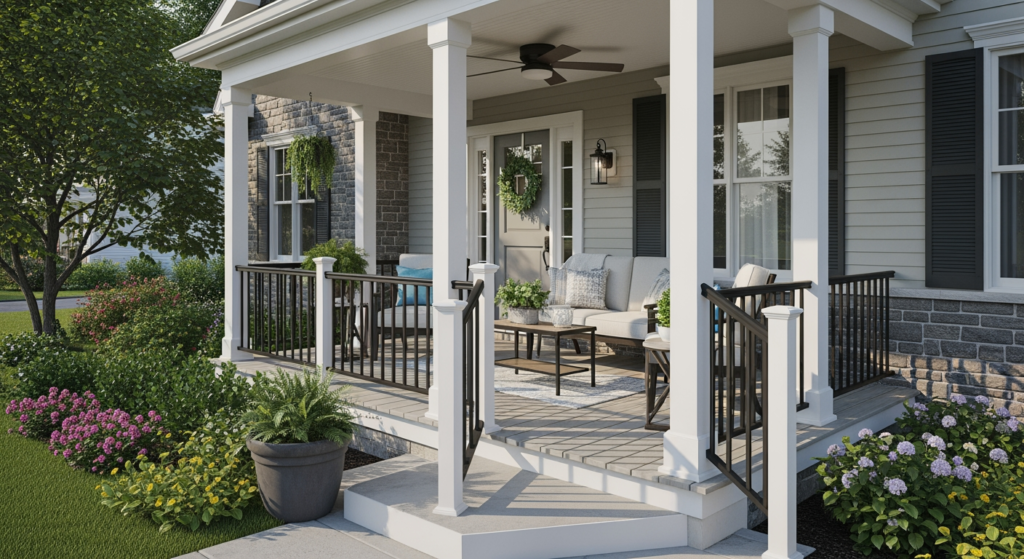
Thinking about a fresh entryway that welcomes guests year-round? I’ll walk you through front porch design ideas that look great and stand up to real life. For a quick snapshot of home improvement trends and spending shifts that affect porch projects, the U.S. Census Bureau offers useful national context on housing and renovation patterns at census.gov.
Why smart front porch design matters
Your front porch is more than a roofed entry. It’s the handshake your home gives the street. A well-designed porch improves curb appeal, adds usable living space, and can increase resale value. Practical design also solves everyday problems: shelter from rain while fumbling for keys, a safe step for kids and seniors, and a spot for a quick chat with a neighbor. I focus on designs that balance beauty, function, and durability so the porch works for seasons and activities.
Current trends shaping porch projects
Two trends are shaping how people approach front porches today. First, outdoor living keeps growing. Homeowners want porches that feel like an extension of the living room—comfortable seating, all-weather textiles, and thoughtful lighting. Second, low-maintenance and sustainable materials are in demand. Composite decking, durable porch paints, and moisture-resistant finishes reduce upkeep and stretch the life of the porch.
Why these trends matter
These trends aren’t just about style. They respond to real needs: limited time for maintenance, higher expectations for outdoor comfort, and a desire for long-term value. Choosing modern layouts and materials up front saves money and hassle down the road.
Popular front porch design ideas to consider
I break porch ideas into approachable categories so you can match one to your home and budget. Pick one focus, then layer in extras for a polished result.
Classic covered porch
A covered porch gives year-round protection and creates a clear outdoor room. Keep the roofline simple, choose weather-resistant flooring, and add comfortable chairs with a small side table for drinks or packages.
Small porch, big impact
Even tiny porches can shine. Use a single statement chair, a textured rug, and vertical planters to add color without crowding. A slim bench with storage is a smart two-in-one choice for shoes and cushions.
Open stoop with steps
An open stoop blends the yard and entry. Focus on tidy railings, durable treads, and a clear path from the sidewalk. Add a single pendant light or wall sconce for nighttime visibility.
Wraparound porch elements
If your home supports it, a partial wraparound porch stretches the living area and creates multiple seating zones. Vary materials subtly—different rugs or cushions—to define each spot while keeping the look cohesive.
Materials and finishes that last
Choosing the right materials is the backbone of a porch that endures. Think long-term rather than just upfront cost. Here’s what I recommend and why.
- Flooring: Composite decking or rot-resistant hardwoods reduce rot and staining. They shrug off moisture better than untreated wood.
- Railings: Powder-coated metal or low-maintenance wood alternatives stand up to weather and need less paint over time.
- Ceiling and trim: Smart use of fiber cement trim and moisture-resistant paint keeps joints tight and reduces cracking.
- Hardware: Stainless steel fasteners and marine-grade hardware prevent rust and keep the structure solid for years.
Lighting, safety, and small upgrades that make a big impact
Most homeowners can boost usability and style with a handful of targeted upgrades. Lighting and safety features are easy wins that affect daily life.
- Layered lighting: Combine a pendant or chandelier for general light, wall sconces for balance, and step lighting for safety.
- Non-slip treads: Add textured finishes on stairs for traction in wet weather.
- Smart switches: Install motion sensors or smart lighting to welcome you home and save energy.
- Storage seating: Benches with storage keep the porch tidy and provide a place to sit while removing shoes.
How to plan a front porch renovation: a practical roadmap
Renovations can feel overwhelming. I map projects into clear steps so you know what to expect and can avoid costly mistakes.
- Define your goals: Decide whether you want more curb appeal, functional space, accessibility, or all three. Prioritize must-haves vs. nice-to-haves.
- Measure and sketch: Get accurate dimensions and a rough sketch. Note stairs, roof overhangs, and nearby landscaping that affects construction.
- Choose materials and finishes: Pick durable flooring, railing style, lighting, and paint colors before ordering materials to avoid delays.
- Hire trusted pros and schedule work: Get at least two quotes, check references, and schedule around weather for exterior work.
Permits, accessibility, and practical issues
Before knocking down anything, check local building rules. Many porch changes—adding stairs, increasing roof span, or altering support posts—need permits. Accessibility is another practical concern. A gentle ramp, wider clearances, and handrails make the porch usable for all family members and can be neatly integrated into the design.
Budgeting, costs, and return on investment
Porch projects range widely in cost depending on scale and materials. A basic refresh—paint, lighting, and new railings—can be modest. A full rebuild with new roofline and structural work is pricier. Consider these guidelines:
Investing in quality materials and smart design typically improves resale value and lowers lifetime maintenance costs. Focus spend on structural items and weather-exposed surfaces first, then finishes and accessories.
Styling tips that keep the porch fresh all year
Style your porch to fit your lifestyle and the seasons without overcommitting. Choose a neutral base for furniture and swap accents seasonally for an updated look.
Here are a few low-effort decoration ideas I often recommend:
- Layer textures with outdoor rugs and woven cushions for comfort and color.
- Use planters with hardy perennials and seasonal annuals for year-round interest.
- Keep a simple color palette—two primary colors and a neutral—to make seasonal swaps effortless.
- In colder months, add an outdoor-safe throw and a doormat that traps moisture to keep floors clean.
Common problems and how to solve them
I see the same issues on repeat: water pooling, cramped traffic flow, and rotting treads. Most problems have practical fixes:
– Water issues usually stem from improper slope or blocked drainage; regrading, adding a small gutter, or improving flashing often fixes it.
– Traffic flow problems happen when seating or planters cut into clear paths; create a minimum 36-inch walk zone and place furniture to the side.
– Rotted decking or posts means it’s time to replace with rot-resistant materials and upgrade flashing to protect joints.
How a professional can help and what to expect
Contractors bring experience with local permit rules, structural needs, and material selection. A good pro helps you refine the design, avoid unnecessary expenses, and coordinate trades like electricians and roofers. Expect a clear written estimate, a project timeline, and a communication plan so you know who to call for updates.
Two quick trends to watch this season
First, homeowners are mixing smart tech with classic porches—think hidden speakers, smart locks with keypad lighting, and motion-triggered lighting tied to home systems. Second, sustainable finishes are rising: low-VOC paints, reclaimed wood accents, and composite materials that reduce long-term waste.
Final checklist before you start
Run through this brief checklist to make sure your porch project starts smoothly:
- Clear goals and budget
- Accurate measurements and a simple plan
- Material samples on-site to check color and texture with light
- Permits and known utility locations marked
Ready to transform your front porch into a durable, welcoming space that matches how you live? For a local, experienced approach to front porch design and renovation, reach out to Tipton’s Fine Tuned Carpentry for a consultation. I’ll help you plan practical upgrades that fit your style and budget.