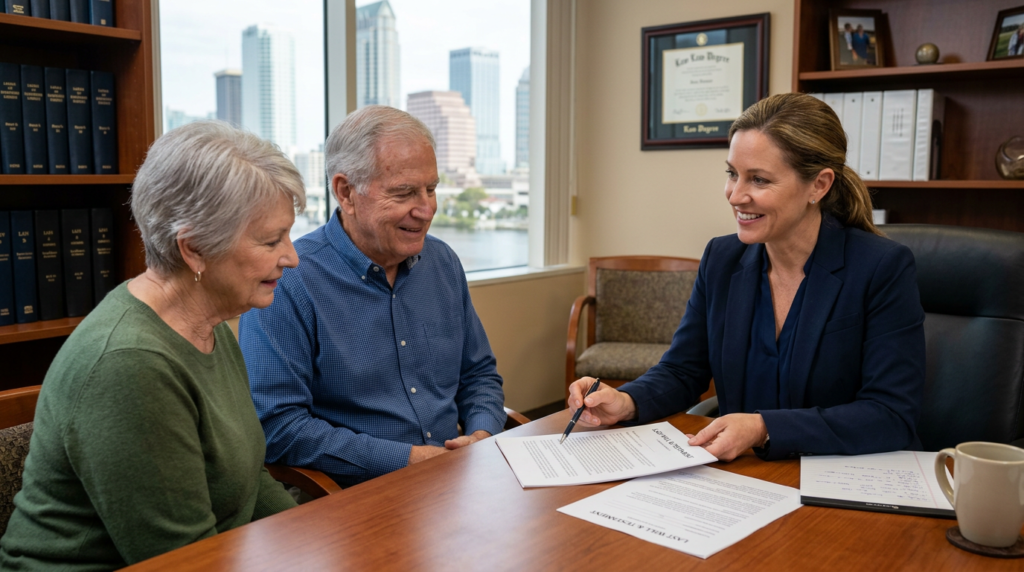
Quick answer: Online forms can work for a very simple situation, but many Tampa families benefit from an estate planning attorney when they own a home, have minor children, want to avoid probate, have blended-family concerns, or need long-term-care planning. An attorney can tailor Florida-specific documents, coordinate beneficiary designations and asset titles, and reduce the chance of paperwork being invalid, inconsistent, or rejected—issues that commonly lead to delays or court petitions later.
Where Online Forms Commonly Break Down
Online templates usually assume a one-size-fits-most plan. Florida rules around homestead property, witnesses, notarization, and what happens if a beneficiary dies first can create legal gaps if the documents don’t match your real life. A local Tampa Florida estate planning attorney can flag Florida-specific traps before they cause avoidable administrative delays or require a probate filing or court petition to correct.
Common failure points include naming the wrong person to act (or not naming backups), leaving out powers of attorney that a bank may accept, and creating conflicts between a will and beneficiary designations on accounts. Examples of will-versus-beneficiary conflicts include: (1) a will leaves “everything to my spouse,” but a retirement account beneficiary is still an ex-spouse; (2) a will gives a child a share, but a life insurance policy names only one sibling; (3) a will sets up a trust for minors, but a payable-on-death bank account names the minor directly, which may trigger a guardianship or restricted account process.
Another frequent issue is trying to “avoid probate” with a DIY trust but never retitling assets into the trust, which can leave major assets outside the trust and still subject to probate. General examples of trust-funding steps include retitling a house deed into the trust (when appropriate), updating non-retirement brokerage or bank accounts to the trust, and assigning certain personal property or business interests to the trust using the right transfer documents.
Florida-Specific Checklist (General Guidance)
Florida-specific items that may matter in a basic estate plan include: will signing formalities (Florida typically requires specific witnessing rules), durable power of attorney requirements (Florida has technical execution rules and certain “superpowers” that often require express wording), and homestead restrictions that can affect who can inherit or how a home can be devised.
Other Florida-tied details that often come up: how a deed is titled (individual, joint tenants with right of survivorship, tenants by the entirety for married couples), how “lady bird”/enhanced life estate deeds are treated in practice, and whether beneficiary designations align with Florida default rules if someone predeceases you. Requirements change; confirm current Florida rules with an attorney.
For quick self-checking, compare your documents against current Florida sources such as Fla. Stat. § 732.502 (execution of wills) and Fla. Stat. § 709.2105 (execution requirements for powers of attorney). Those citations help you know what to verify, but they don’t replace advice for your specific facts.
What a Florida Estate Plan Usually Includes
A solid estate plan is more than a will. Many people need a package of documents that work together while you’re alive and after you’re gone. In Florida, that often means planning for both incapacity and death.
Many plans include a will (or a revocable living trust), durable power of attorney, health care surrogate designation, living will, and HIPAA authorization. Depending on goals, it can also include a designation of preneed guardian for minors, a separate document naming guardians, and instructions for managing or distributing property over time instead of all at once.
Good planning also checks how your house is titled (especially if it is homestead), how retirement accounts and life insurance name beneficiaries, and whether “payable on death” or “transfer on death” designations fit your intent. The documents and the asset titles have to agree, or your plan can be bypassed by a contract-based beneficiary designation.
Signs You Should Talk to an Attorney Before You Sign Anything
Get legal guidance if any of these apply: you own real estate, you want to keep a home in the family, you have minor children, you’re divorced or remarried, you support someone financially, or you worry about a beneficiary’s spending, addiction, or creditor issues. Those are common reasons people use trusts or more specific will provisions.
Also get help if you want to reduce probate, plan for long-term care, or make sure someone can act for you quickly if you’re incapacitated. Florida powers of attorney are technical, and drafting gaps can lead to a bank or title company requesting a different form or additional proof, which may require extra paperwork or legal steps.
If you already have documents, review them after major life changes. A typical trigger is marriage, divorce, a move to Florida, buying a home, a new child, or a death in the family. Even if the documents are valid, they may no longer match your current beneficiaries, assets, or decision-makers.
How to Prepare for Your First Estate Planning Meeting
Bring a short list of your assets (home, bank accounts, retirement accounts, life insurance, business interests), how they’re titled, and any beneficiary designations you can access. Also bring names and contact info for the people you want as personal representative (executor), trustee, and health care decision-maker, plus at least one backup for each role.
Think through a few practical questions: who should raise your children if needed, who should manage money for them, and at what ages distributions should happen. If you’re concerned about conflict, say so—planning can add guardrails like clear successor choices, separate roles, and structured distributions.
If you want local help putting the documents and the asset-titling steps into one coherent plan, The Gonzalez Law Firm is a place to start.