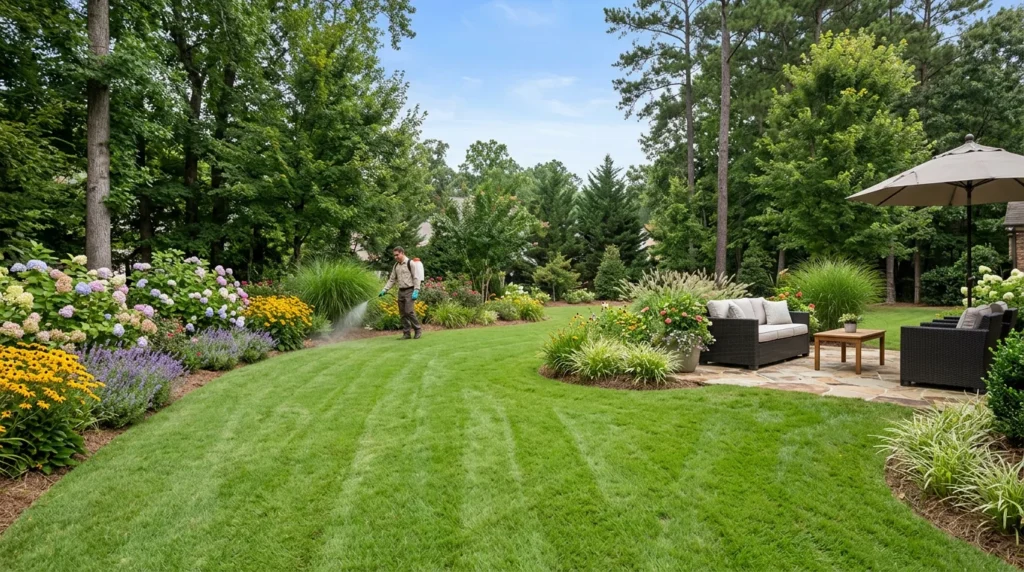
Quick answer: Yes—yard sprays can reduce adult mosquitoes around patios, decks, and shaded landscaping in Lawrenceville, but results vary with rain, irrigation, and nearby breeding sources. Many products are labeled to last about 2–4 weeks; in real yards, homeowners often see the strongest drop for roughly 1–3 weeks before pressure builds again. Pairing treatment with dumping standing water and trimming dense foliage improves consistency.
What A Yard Spray Actually Does
A yard spray is designed to reduce adult mosquitoes where they hang out during the day: the underside of leaves, dense shrubs, ivy, tall grass, and the shady edges around your home. In humid Georgia summers—especially from late spring through early fall—those cool, protected spots can stay mosquito-friendly even if your lawn looks dry. A good application focuses on the perimeter, landscaping, and the areas people actually use, not just open turf.
Most treatments work by leaving a residual on plant surfaces that can knock down mosquitoes as they land and rest. Labels for many professional and consumer products commonly describe residual control in the range of about 2–4 weeks, but real-world longevity is often shorter after storms, frequent sprinkler cycles, or rapid plant growth. If you’re comparing options for yard spray Lawrenceville GA, ask specifically what areas are treated and how they handle dense landscaping, because that’s where mosquitoes tend to hide.
Yard sprays don’t “solve” mosquitoes for the whole neighborhood. They can reduce pressure on your property, but mosquitoes can still fly in from nearby woods, drainage easements, or a neighbor’s standing water. Consistent coverage and a plan for re-treatment usually matter more than trying to “hit it once” and be done.
How Long Results Last In Gwinnett County Conditions
In typical summer conditions, many homeowners report the biggest improvement in the first week or two, with noticeable fade-out somewhere around 1–3 weeks depending on weather and watering. That lines up with how residues break down from sunlight, heat, and leaf turnover—plus how quickly new mosquitoes move in from nearby sources.
Lawrenceville and the rest of Gwinnett County can see pop-up thunderstorms and stretches of frequent rain in peak mosquito months (often June through September). Heavy rain soon after an application, or daily irrigation on landscaped beds, commonly pushes people toward a shorter retreatment cadence than the label’s “ideal” timeframe. If your yard stays damp—shade, thick groundcover, or poor drainage—expect mosquito pressure to rebound faster than in a sunny, dry lot.
Local Hot Spots And A Simple DIY vs Pro Decision Guide
Some mosquito problems are mostly a “source” issue, not a “spray more” issue. In Lawrenceville-area neighborhoods, common trouble spots include wooded edges behind fences, drainage ditches and easements, low spots that hold water after storms, creek corridors, and dense shrubs along property lines. On the home side, check gutters, downspout extensions, corrugated drain pipes, kiddie toys, grill covers, tarps, plant saucers, birdbaths, and any containers tucked into landscaping.
DIY source reduction is often enough if you mainly notice mosquitoes at dusk, you can dump or refresh standing water every few days, and your yard doesn’t border a wooded/drainage area that stays wet. Schedule professional treatment if you’re getting daytime bites (a clue mosquitoes are resting very close), you have standing water you can’t eliminate (like a drainage feature or persistent low spot), or mosquitoes keep reinfesting from adjacent woods, ditches, or unmanaged lots.
If you call a provider, ask what zones they treat (foliage, under decks, shaded borders), what product type they’re using (and any odor or plant sensitivity concerns), how long it needs to dry and become rainfast, and what retreatment interval they recommend for a rainy/irrigated Lawrenceville yard. Also ask what you should do between visits—like trimming back ivy or thinning shrubs—to reduce harborage.
If you want help choosing a treatment plan and getting the application done safely and thoroughly, Zero Mosquito is a local option to call.