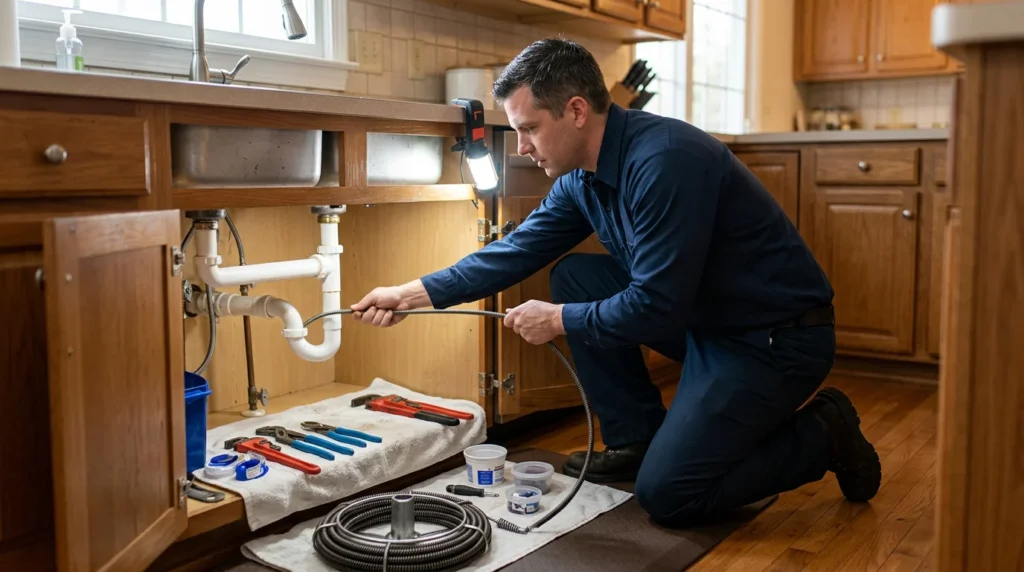
Quick answer: Use DIY steps if one fixture is simply slow and there’s no odor, gurgling, or backup elsewhere. Stop using water and call a plumber if multiple drains are affected, you smell sewage, you hear gurgling when other fixtures run, or water backs up into a tub or floor drain. Those signs often point to a deeper branch-line or main-line blockage that needs proper tools and diagnosis.
Quick Ways to Tell How Serious the Clog Is
Run this quick checklist before you start pouring anything down the drain:
1 fixture only (one sink, one tub, one shower) and no sewage odor? Try the DIY steps below.
Multiple fixtures slow/backing up (for example, toilet plus shower, or two sinks)? Stop using water and call a plumber.
Sewage smell from a drain or around a floor drain? Stop using water and call a plumber.
Gurgling when you run another fixture (toilet bubbles when the sink runs)? Stop using water and call a plumber.
Water backing up into a tub, shower, or floor drain? Stop using water and call a plumber.
A single slow sink or shower usually means a local clog close to that fixture. Hair, soap scum, and toothpaste build up in bathroom drains; grease and food residue are common in kitchen lines. If only one drain is acting up and the rest of the house is normal, you can often start with simple cleaning at the stopper or trap.
More than one drain backing up at the same time signals a bigger problem. If the toilet gurgles when you run a sink, or the shower fills when you flush, the blockage may be in a shared branch line or the main line. That’s the point where calling for drain cleaning Athens GA makes sense, because the tools and diagnosis are different than a quick hair pull.
DIY Steps That Are Usually Safe (And What to Avoid)
Start by removing what you can reach. Pop out the tub or sink stopper and clear hair and sludge by hand (gloves help). For many bathroom clogs, that alone restores flow. After that, a hot-water flush and a little dish soap can help move softened residue through the line.
A small hand snake or zip-style plastic drain tool can be effective for bathroom drains. Feed it gently, pull debris out, and rinse. If you’re working under a sink, placing a bucket under the P-trap and cleaning it out may solve a lot of kitchen slow-drain problems.
Chemical drain cleaners can create problems, especially if you have older metal piping, fragile fittings, or you’ve already plunged/snaked and the line is still blocked. They may generate heat, may worsen corrosion, and can leave caustic liquid sitting in the trap—making a later repair or snaking attempt riskier. If you’ve used a chemical product and the drain is still clogged, stop adding water and tell the plumber what you used.
What a Pro Can Diagnose (And What the Findings Usually Mean)
For recurring or whole-house issues, pros often start by matching the symptom to the likely location: one fixture points to a local trap or branch; multiple fixtures point downstream; a lowest-level drain (like a basement or first-floor shower) backing up can suggest the main line is restricted. From there, a camera inspection can show what’s actually happening inside the pipe instead of guessing.
A camera may reveal roots (often implies the line has joints or cracks that let roots in, so clearing may be temporary unless you address the entry point), a grease/sludge coating (often implies buildup on pipe walls and a need for thorough cleaning plus habit changes), a belly/sag holding water (often implies a structural or grading issue where debris keeps collecting), or a break/collapse (often implies repair or replacement is needed rather than repeated cleanings). It can also show a foreign object (toy, wipe mass) that may require targeted removal.
Before the visit, you can safely help by stopping water use to the affected fixtures, noting exactly which drains are slow or backing up (and when), and keeping the area around cleanouts and under sinks accessible. If you can do so safely, take a quick photo of any backup so you can describe what you saw.
Cleaning Methods and Prevention Without Guesswork
Professional drain cleaning isn’t about “stronger chemicals.” It’s usually mechanical clearing (cables/augers) and, in some cases, high-pressure water cleaning. Hydro jetting can be very effective for grease and heavy buildup, but it isn’t automatic for every home. It depends on pipe material and condition, and it should follow an inspection or a clear reason to believe the line can handle the pressure without worsening weak spots.
To prevent repeat clogs, use sink strainers, keep grease out of kitchen drains, and limit what goes down disposals. In bathrooms, regular hair removal at the stopper prevents the classic slow-shower problem. If clogs come back quickly after you clear them, that’s a sign you’re dealing with more than a simple plug near the drain opening.
If you want help diagnosing the cause and clearing the line safely, Blueprint Plumbing Services LLC is the place to get help.