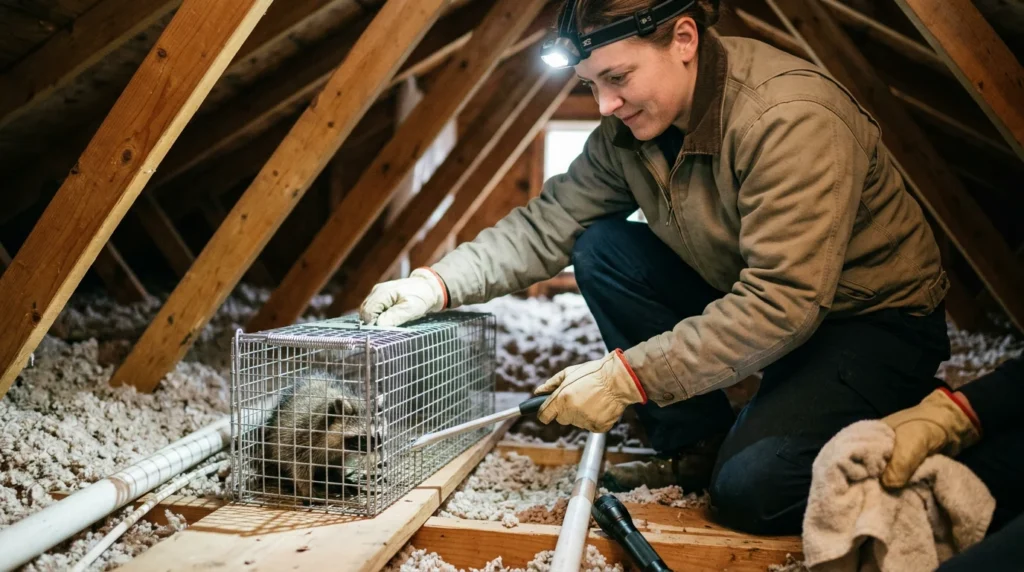
Quick answer: Humane wildlife removal focuses on getting animals out of your home or yard safely while preventing them from coming back. A typical job includes identifying the species and entry points, using species-appropriate trapping or one-way exit devices, relocating only where legal, and then sealing gaps and cleaning up contaminated areas. The goal is less stress for the animal and fewer repeat infestations for you.
What “Humane” Means in Real-World Wildlife Control
Humane wildlife work isn’t just “no poison.” It means choosing methods that minimize suffering and avoid creating new problems, like orphaned young, animals dying in walls, or a panicked critter tearing up ductwork. In practice, that usually involves calm, targeted capture or exclusion, quick transport when relocation is allowed, and a plan to keep the animal from returning.
If you’re comparing options, look for a service that pairs removal with prevention. A trap without sealing entry points is a short-term fix, and sealing without confirming the animal is out can trap it inside. Many homeowners in town start by asking about humane wildlife removal because they want the animal handled responsibly and the house protected at the same time.
Local rules and best practices matter. Some species can’t legally be relocated far from where they were captured, and some situations are better handled with on-site exclusion. A good approach is species-specific, not one-size-fits-all.
Common Athens-Area Situations and the Clues to Look For
In the Athens area, homeowners commonly encounter squirrels in attics, raccoons around chimneys and crawlspaces, bats roosting along rooflines, and animals like skunks or opossums sheltering under sheds and decks. The “right” method changes based on the animal’s behavior and biology.
Listen and look for patterns. Daytime scurrying often points to squirrels; heavier thumps at night can suggest raccoons. Grease marks along entry holes, torn soffit screens, and displaced insulation are strong hints. In crawlspaces, you might notice musky odor, latrine spots, or duct insulation pulled down.
Health and safety is a practical concern, not scare talk. Droppings, nesting material, and urine can contaminate insulation and leave lingering odor that attracts other animals. If you see staining on ceiling drywall, strong ammonia-like smells, or flies gathering in one area, treat it as a cleanup-and-repair job, not just a removal.
How Pros Remove Wildlife Without Creating Bigger Problems
A typical process starts with an inspection to confirm the species, locate entry points, and check for young. That last part matters: removing a mother while babies remain can create noise, odor, and a tough ethical situation. Timing and method are chosen to avoid that outcome whenever possible.
Simple step-by-step checklist: Inspect → Identify → Protect young → Exclude/Trap → Seal → Sanitize. “Inspect” means walking the roofline and foundation, checking attic/crawlspace, and looking for rub marks, droppings, and daylight through gaps. “Identify” uses tracks, droppings, sound timing, and camera checks where appropriate. “Protect young” can mean delaying exclusion until young are mobile or using monitored methods so the family isn’t split up.
For many attic and wall-entry situations, one-way doors (exclusion devices) let the animal leave but prevent re-entry. Trapping is often used when exclusion isn’t practical or when an animal is denning in a spot like a chimney base. After the animal is out, the long-term fix is closing gaps—roofline returns, soffit intersections, gable vents, plumbing penetrations, and crawlspace openings are common weak points. As rough size estimates, small rodents can slip through gaps around 1/4 inch, while squirrels typically need closer to a 2-inch opening; loose fascia corners, uncapped chimney flues, and torn vent screens can easily exceed those sizes.
Cleanup varies by severity. Light contamination may only need spot removal and disinfection; heavier cases can involve removing soiled insulation and addressing odor. If repairs are delayed, the same entry point can be reused quickly, especially during cold snaps or after storms.
Georgia legality note (general info)
Georgia legality note (general info): Wildlife rules can vary by species, location, and what’s being done (trapping, exclusion, relocation, or euthanasia). Some animals are protected or have special handling requirements, and relocation may be restricted in certain situations.
For the most accurate guidance, check current Georgia DNR guidance and any local ordinances, and ask your wildlife professional what methods are allowed for the specific species on your property. If there’s a public health concern (like a bat in a bedroom), your local health department or animal control can advise on next steps.
What to Do While You’re Waiting for Service
Keep people and pets away from the area. Don’t block an active entry hole unless you’re sure the animal is out; that can force it deeper into the structure. If the animal is in living space, close interior doors to contain it, give it a quiet path to an exterior door if it’s safe, and reduce noise and foot traffic.
Clear decision triggers help. If it’s a bat and there was any chance of contact with a sleeping person (or an unattended child or impaired adult), treat it as a potential rabies exposure: avoid handling the bat, contact health authorities/animal control for guidance, and preserve the bat for testing only if instructed. If you smell strong gas-like odor (possible skunk spray in a confined area) or see ceiling staining that suggests an active nest above drywall, pause DIY attempts and get professional help before damage spreads.
Do not attempt:
- Handling bats, raccoons, or foxes barehanded, especially if they’re acting oddly or out in daylight
- Using poison indoors or in crawlspaces (it can lead to animals dying in walls and secondary poisoning risks)
- Climbing onto steep roofs or reaching into chimneys/attics where you can’t see the animal
If you want help in Athens, GA, Athens Exterminating can inspect the situation, remove the animal humanely, and recommend the right exclusion and cleanup steps to prevent a repeat visit.